
Advanced Stomach & Esophageal Cancer Treatment in Bangalore
Esophageal and Stomach Cancer
Acidity, Indigestion & A feeling of food sticking in the throat. For many people, these symptoms appear harmless. But in some cases, they are the first signs of something far more serious — esophageal or stomach cancer. Unexplained weight loss, Anemia ( Low red blood cells) and it’s signs like easy fatiguability are red flags. Unlike other cancers that may show visible lumps or sudden changes, these cancers often remain hidden until they reach advanced stages. That is what makes timely detection and specialized care so critical.
At Solaris Cancer Center, patients receive esophageal and stomach cancer treatment in Bangalore with the latest diagnostic tools, precision-based therapies, and a strong focus on improving quality of life. Recognized as the best esophageal and stomach cancer treatment center in Bangalore, Solaris brings together personalized surgical & medical oncology under one roof to deliver comprehensive care. Radiation therapy is done at an associated outsourced facility in a low cost hassle-free manner.
As Dr. Manish Kumar, Founder and Chief of Medical Oncology, explains, “Advances in oncology have changed the outlook for esophageal and stomach cancers. Targeted therapies and Immunotherapy has come in a big way which has changed the survival outlook completely. With modern therapies, what was once considered untreatable can now be managed effectively.”
With over 25 years of experience in treating complex cancers, Dr. Kumar combines medical excellence with compassion and personalized care, ensuring patients receive not only advanced treatment but also unwavering support throughout their journey..
What is Esophageal and Stomach Cancer
Both esophageal and stomach cancers begin in the digestive tract but affect different organs.
Esophageal Cancer
This cancer starts in the esophagus, the tube carrying food from the throat to the stomach. It often develops in the cells lining the esophagus and is more common in men. Chronic acid reflux, smoking, heavy alcohol intake, and obesity are significant risk factors.
Cancer in the upper & middle esophagus are of squamous cell in nature whereas lower esophagus cancers resemble stomach cancers in nature and are primarily adenocarcinoma.
Stomach Cancer (Gastric Cancer)
This cancer originates in the stomach lining. While it can develop anywhere in the stomach, it most commonly arises in the glandular cells. Risk factors include Helicobacter pylori infection, diets high in smoked or processed foods, family history, and long-standing gastritis.
Both types share a dangerous trait — symptoms such as heartburn, indigestion, or bloating can be easily dismissed, delaying diagnosis. When detected early, these cancers are far more treatable.
Stages of Esophageal and Stomach Cancer
Staging of cancer enables experts to plan the appropriate treatment strategy.
Stages of Esophageal Cancer:
Stage 0: Abnormal cells are present only in the innermost layer of the esophagus.
Stage I: A small tumor grows within the lining, with minimal invasion.
Stage II: Cancer spreads into deeper muscle layers.
Stage III: Significant spread to surrounding tissues and lymph nodes.
Stage IV: Advanced disease where cancer reaches distant organs such as the liver or lungs.
Stages of Stomach Cancer:
Stage 0: Precancerous changes in the inner lining.
Stage I: Cancer is confined to the inner layers and may affect a few lymph nodes.
Stage II: Tumor extends deeper into the stomach wall and multiple lymph nodes.
Stage III: Tumor extends deeper into the stomach wall and multiple lymph nodes.
Stage IV: Metastasis to distant organs like the liver, lungs, or bones.
Treatment Options Available at Solaris Cancer Center in Bangalore
At Solaris, treatment decisions are guided by a multidisciplinary tumor board, ensuring that every patient benefits from collective expertise across oncology specialties.
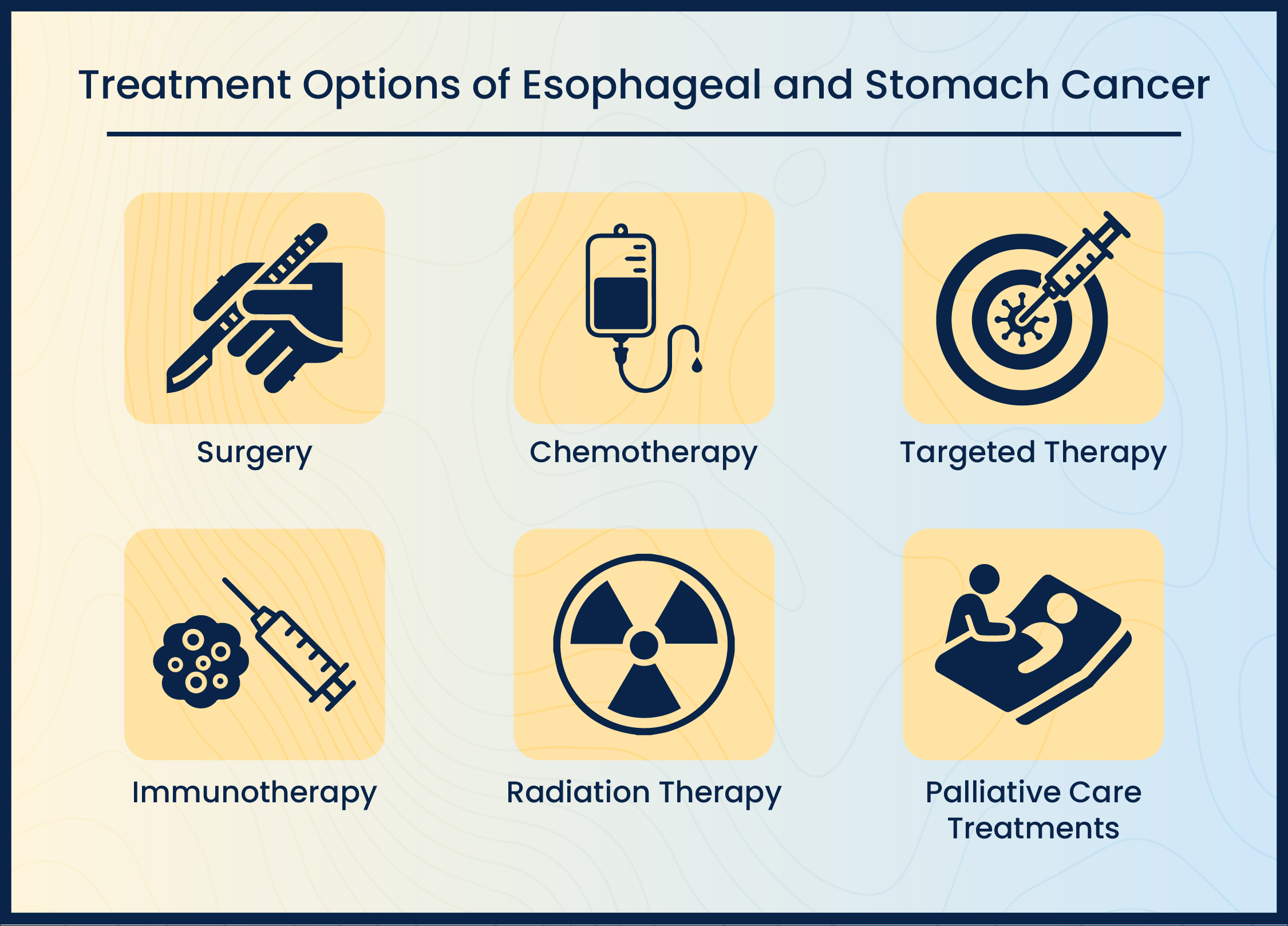
Available treatment options include:
1. Surgery: Often the first line of approach whenever possible.
• Esophagectomy – removal of part of the esophagus, often combined with reconstruction.
• Gastrectomy – removal of part or the entire stomach.
2. Radiation Therapy: Outsourced through leading facilities, high-energy rays are directed at the tumor to destroy cancer cells, often used when surgery alone is insufficient. Radiation therapy is always used in grade III & IV glioma. It goes on for little over a month and given 30 times in that period.
3. Chemotherapy: Drugs are given orally or intravenously to shrink tumors before surgery or to destroy remaining cancer cells afterward. Commonly 5FU/Capecitabine is used in combination with other drugs as the frontline therapy. Immunotherapy may be used in this setting if patient’s tumor is PDL1 positive.
4. Targeted Therapy: Specialized medicines that block cancer cell growth pathways, offering effective results with fewer side effects. The commonest drug is Trastuzumab in Her2Neu positive cases.
5. Immunotherapy: Boosting the body’s immune system to recognize and attack cancer cells more effectively. The response rates are much higher if PDL1 is positive. They are used in combination with chemo or can be used alone.
6. Radiation Therapy: High-energy beams directed at the tumor, more commonly used for esophageal cancer, especially when combined with chemotherapy.
7. Palliative Care Treatments: For advanced stages, therapies focus on reducing symptoms like difficulty swallowing, pain, or nutritional issues, ensuring comfort and dignity.
Why Choose Solaris Cancer Center for
Esophageal and Stomach Cancer Treatment in Bangalore
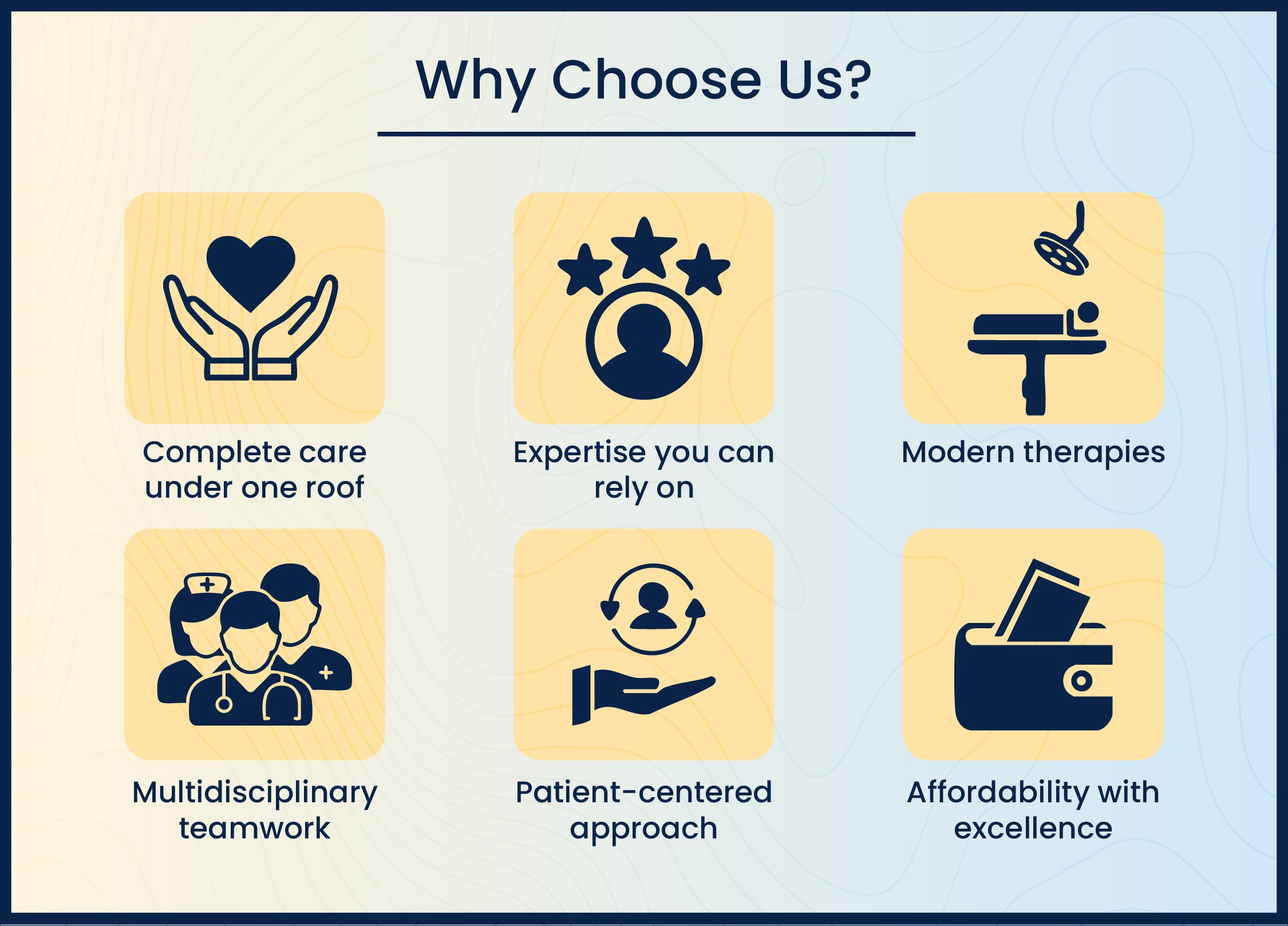
When facing cancers as complex as those of the esophagus and stomach, patients need more than standard care. Solaris offers:
1. Complete care under one roof: From advanced diagnostics to surgery, chemotherapy, radiation, and rehabilitation.
2. Expertise you can rely on: Led by Dr. Manish Kumar, with 25+ years of oncology experience.
3. Modern therapies: Access to immunotherapy, precision oncology, and targeted treatments.
4. Multidisciplinary teamwork: Surgeons, oncologists, radiologists, nutritionists, and counselors working together.
5. Patient-centered approach: Compassionate care that focuses on both survival and quality of life.
6. Affordability with excellence: Advanced care delivered with transparency and accessibility.
Life After Treatment
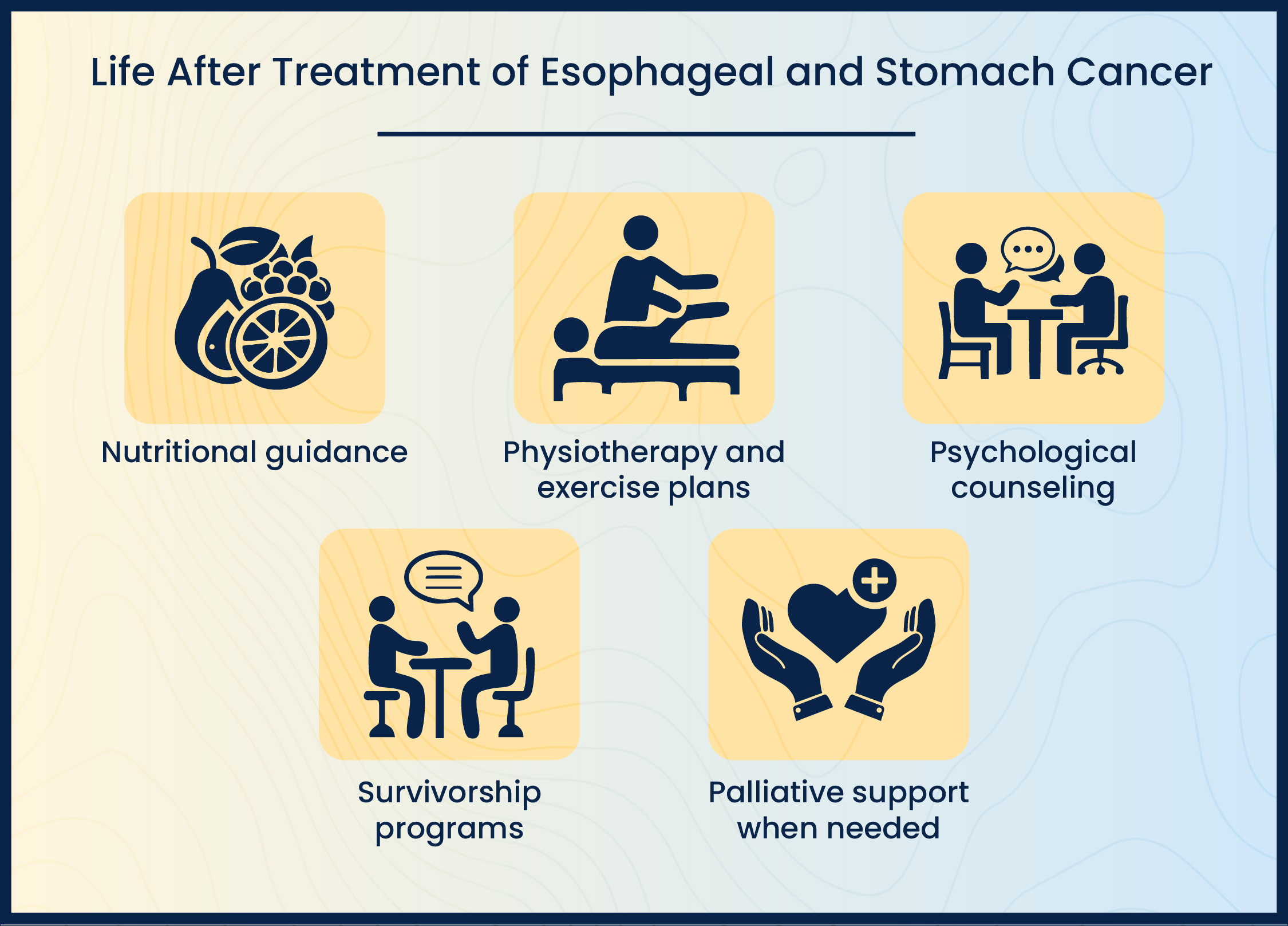
Completing treatment is a significant milestone, but recovery continues well beyond the hospital. Solaris ensures patients are supported through:
When facing cancers as complex as those of the esophagus and stomach, patients need more than standard care. Solaris offers:
1. Nutritional guidance
To address swallowing difficulties and maintain healthy weight.
2. Physiotherapy and exercise plans
Designed to improve stamina and reduce fatigue.
3. Psychological counseling
Helping patients and families manage anxiety, depression, or fear of recurrence.
4. Survivorship programs
Structured follow-up plans with regular scans and consultations.
5. Palliative support when needed
Focused on comfort, symptom relief, and dignity for those in advanced stages..
“Long-term survival is not just about living without cancer. It is about rebuilding health, energy, and confidence to live fully.” – Dr. Manish Kumar
Frequently Asked Questions:
1. What are the first signs of esophageal cancer?
Early signs may include difficulty swallowing, chest pain, frequent heartburn, or unexplained weight loss.
2. What is the survival rate for esophageal cancer?
Survival depends on the stage at diagnosis and treatment received. Early detection significantly improves long-term outcomes.
3. What lifestyle changes help recovery after treatment?
Balanced diet, avoiding tobacco and alcohol, maintaining a healthy weight, and regular physical activity all aid recovery.
4. Can diet help in preventing stomach cancer?
Yes, eating more fresh fruits, vegetables, and whole grains while cutting back on smoked and processed foods lowers risk..
5. What is palliative care for esophageal and stomach cancer?
Palliative care focuses on improving quality of life by relieving symptoms like pain, difficulty swallowing, or nausea, especially in advanced stages.
6. Can esophageal or stomach cancer come back after treatment?
Recurrence is possible, which is why regular follow-ups, imaging, and check-ups are crucial even after successful treatment.
Disclaimer:The information shared in this content is for educational purposes and not for promotional use.